 When people think about getting stronger or fitter, they often focus on the workouts. How many sessions they do, how hard they train and how much effort they put in.
But real progress doesn’t only happen while you’re exercising. It happens when your body has time to recover, adapt and rebuild. Recovery is not a break from training, it is part of the process.
Training Gives Your Body the Signal
When you lift weights or complete a challenging session, you create a stimulus. Your muscles work, your nervous system responds and your body receives a clear message that it needs to adapt. That is a good thing, but it is only the first step.
For your body to actually become stronger, it needs enough time and support to repair. Without that, training can start to feel harder than it should. You may feel more fatigued, more sore or less motivated to keep showing up.
Why Recovery Matters More After 40
As we move through our 40s and beyond, recovery becomes even more important. Our bodies can still get stronger, fitter and more capable, but they often need a smarter approach. That means balancing challenging training with enough sleep, good nutrition, hydration and well planned rest.
It also means listening to your body. Some days you might need a strength session. Other days, a walk, mobility work or a lighter session might be exactly what helps you keep moving forward.
Recovery Helps You Stay Consistent
One of the biggest benefits of good recovery is consistency. When your body feels supported, it is much easier to keep training regularly.
Pushing hard all the time can lead to burnout, soreness or injury. A better approach is to train with purpose, recover well and build momentum over time. This is what creates long-term results.
Train Smart, Not Just Hard
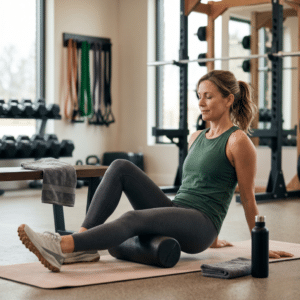
Recovery does not mean doing nothing. It means giving your body what it needs to respond to the work you’re doing. Strength training gives your body the signal, recovery helps it become stronger.
If you would like support with training that balances challenge, recovery and long-term progress, we would love to welcome you in.